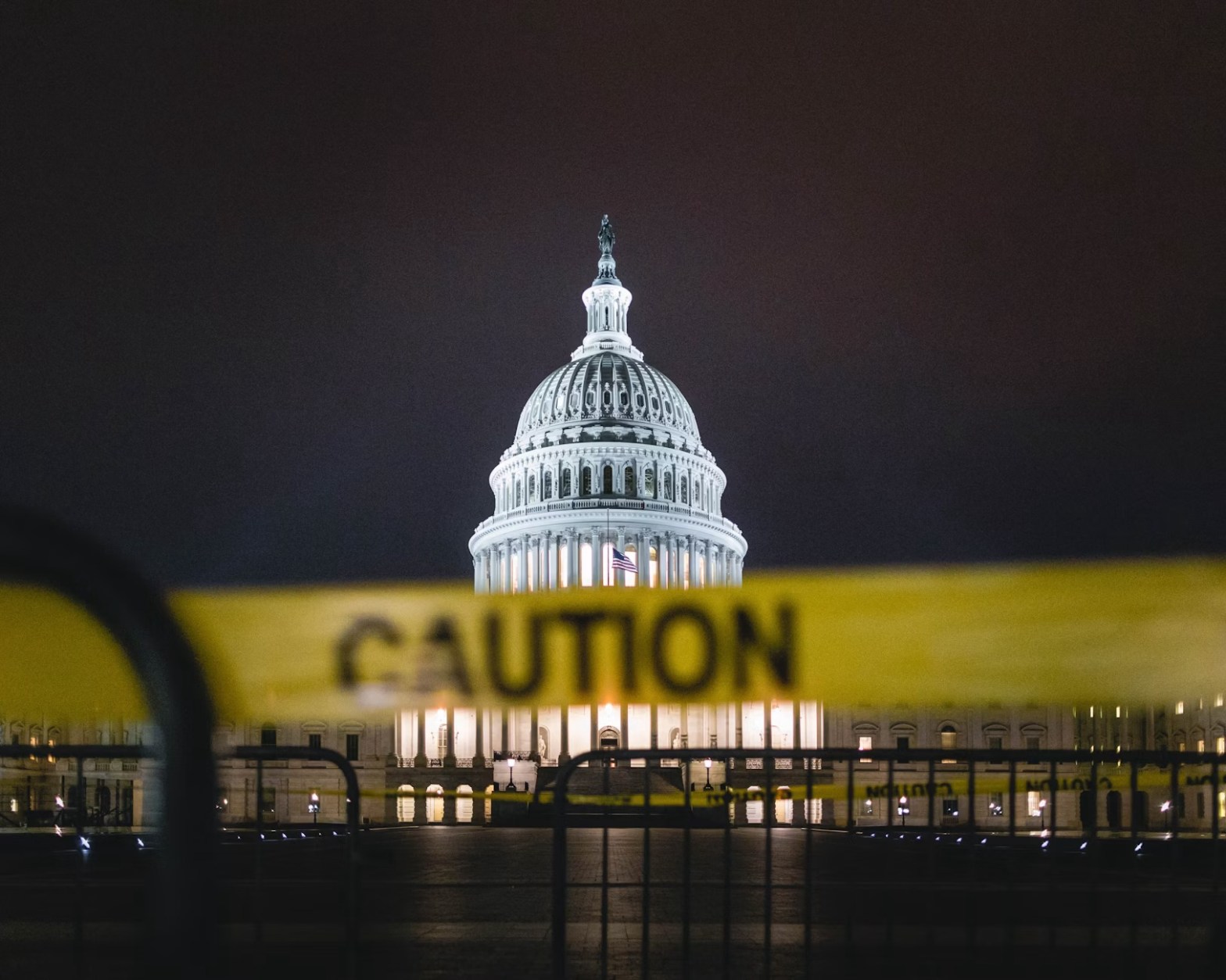
Photo by Andy Feliciotti via unsplash.com
“Turning and turning in the widening gyre
The falcon cannot hear the falconer;
Things fall apart; the centre cannot hold;
Mere anarchy is loosed upon the world.
The blood-dimmed tide is loosed, and
everywhere
The ceremony of innocence is drowned;
The best lack conviction, while the worst
Are full of passionate intensity.”
— The Second Coming, by William Butler Yeats
*The following does not apply to those who choose bigotry over loving thy neighbor. Bigotry, in all forms, must not be tolerated.
We cannot continue in the direction we are going. This seething undercurrent of hatred and vitriol, that is bubbling up in horrific ways, cannot continue without fully spilling over into war. We are witnessing the downfall of American society in real time (whether it was ever truly a proper society is a debate for another time.)
On September 10, 2025 our country suffered yet another school shooting. We also saw the assassination of political pundit and creator of right-wing political action committee (PAC) Turning Point, Charlie Kirk. Then, on September 11, 2025, six Historically Black Colleges and Universities (HBCUs) were on lockdown due to bomb threats, the Democratic National Committee (DNC) headquarters were locked down for the same reason, and a threat from a furious former U.S. Naval Academy midshipman (he was kicked out of the Naval Academy earlier this year), coupled with online misinformation led to the shooting, and injuring, of a current midshipman and a police officer. In August, during the first week of a new school year, a gunman killed two school children and injured 17 others during a school shooting in Minnesota. And earlier this year, on June 14, 2025, Minnesota state representative Melissa Hortman was assassinated in a shooting at her home. The gunman also killed her husband Mark, and their dog during this event. Minnesota state senator John Hoffman and his wife Yvette were also shot by the same gunman. These events are just the most well-known ones between June and mid-September 2025.
Violence, including political violence, cannot be condoned, no matter who the person. Full stop. That said, our rhetoric has created the monster we’re currently facing. Neither political violence nor rhetoric are new to our country, but it has risen dramatically in recent years. And our elected leaders are adding fuel to the fire. A recent article,10 Political Violence Experts on What Comes Next for America, published by Politico.com. highlights the effect our leaders have on political violence and conversation. The more we hear our politicians use vitriolic and violent language, the more commonplace it becomes, and the more comfortable we are all in hearing and using it. It also fuels our fears about those who disagree with us politically. One of the experts, Sean Westwood, an associate professor in the Department of Government at Dartmouth College has been tracking public support for political violence. His data shows that “less than two percent of Americans believe political murder is acceptable, while at the same time, Americans also believe nearly one third of their political opponents support partisan murder.” He says that the biggest problem is not “a widespread desire for violence, but a profound misperception of the other side.” And, as someone who writes political commentary, and makes videos about the same topic, I would wholeheartedly agree. Take, for example, the reactions of prominent politicians and pundits in the aftermath of Charlie Kirk’s death. President Donald Trump, in a video message, called for “all Americans and the media to confront the fact that that violence and murder are the tragic consequence of demonizing those with whom you disagree.” He then blamed the murder on the “radical left” saying that their rhetoric is directly responsible for the violence and he vowed to find “each and every person responsible” for political violence. Conservative political strategist Steve Brannon said “We have to have steely resolve. Charlie Kirk is a casualty of war. We are at war in this country.” Many other prominent right-wing figures such as Fox News host Jesse Watters, Elon Musk, Matt Walsh, as well as editor-in-chief of The Federalist, a conservative online magazine, Mollie Hemingway, followed suit, referencing war and radical leftists having blood on their hands. Former presidents Biden and Obama both condemned Kirk’s murder saying that “this kind of violence has no place in our country.” Utah governor Spencer Cox (R) implored people to choose a different path than violence. He has, for many years, advocated for toning down the increasingly violent political discourse in our country. Charlie Kirk himself was well-known for his divisive and bigoted remarks. He advocated for the right to own guns, saying that “deaths are the price we pay for a strong second amendment.” He often made bigoted remarks about women as well as Black, Muslim, and LGBTQ+ people. Charlie Kirk is a victim of the very society he advocated for. These kinds of statements are shared far and wide via both mainstream and social media. They permeate our consciousness and further our misperceptions of one another.
Politicians and social media anger aren’t really very different. For all of the posturing done in private, when they’re confronted in real time, they fold. Politicians hold town halls and telling their constituents that their lived experiences aren’t actually bad and get shouted out of the room. They back down and try to backtrack on things they’ve said earlier. They don’t know how to handle it when the people that elected them are furious at them for legislation or lack thereof. The same goes for angry people on the internet.
Story time y’all. I haven’t been writing much lately, for a variety of reasons. But, in an effort meet people where they are, I’ve been making videos on TikTok, and sometimes Instagram. It’s been an interesting experiment in how we interact online as opposed to real-life interactions. Last week I made a video about a gentleman and I helping an older lady after she fell on the sidewalk. We helped her gather her groceries, her phone, and her dignity (falling as an adult is so embarrassing… ask me how I know.) The video was about how this is the Washington, DC I know and while we do have our fair share of issues, like all big cities, DC is not the hellhole death trap the Trump administration claims it is. The video eventually got almost 6,800 views on TikTok and over 200 comments. The large majority of the comments said something to the effect of, “Yeah, yeah, yeah. That doesn’t mean the city isn’t awful. It’s terrible and you’re ridiculous for claiming otherwise!” For most of my videos, many people try to negate my lived experiences and pass judgment on me and my life without any knowledge of who I am. That’s fine. It’s expected and I don’t let it bother me very much. But it’s indicative of a larger problem we have here in the United States (and globally.) Our system of governance is fundamentally broken and it’s breaking all of us.
We elect leaders in the hopes they will do what’s right for our country. I think most people do go into politics hoping to make a difference. They begin their jobs, or their campaigns, are realize that the reality of politics is much different than the idea of it. They find that they’re at the mercy of corporate donors for large-scale funding, and that they need soundbites in order to be re-elected. So, they scream and shout, make wild pronouncements, and generally act in ways that will garner attention. Gotta get those clicks, baby! And those soundbites and outsized behavior are then shown on television, radio, the newspaper, and the internet. They’re shared, praised, and ridiculed by you the consumer and voter. And, because the internet provides a barrier between us and the people we’re talking about, people feel free to say whatever they want. They mimic the behavior sent to them via social media algorithms. The more our elected leaders scream and shout, the more we do too.
We all know that people feel very bold on the internet. The reality is even wilder than you can imagine. I’ve been called a variety of lewd names, had comments trying to make me feel small or stupid, others calling me a liar or insisting that I live in a “rich” part of town, as well as plenty of comments saying thank you for doing what I’m doing. Realistically, not one of the people online who have called me names or written comments meant to demean me would dare say any of those things to my face. They’re not that mean in real life and I’m not the liberal jerk they’ve decided I am.
Politics, and the world surrounding it, has been a dirty business since its inception, but with the Citizens United ruling that essentially gave corporations personhood for the purposes of political contributions, it’s gone from bad to worse. Congress has not governed, in any meaningful way, in years. We’ve had more government shutdowns in the last ten years than I can remember in my entire lifetime up to that point. We’ve had so many now that citizens don’t even blink when it happens. Despite the overwhelming majority of Americans, both Democrats and Republicans, supporting common sense gun legislation, our leaders ignore our pleas and let mass shootings continue unabated. The overwhelming majority of Americans say that prescription drug prices need to be lower. Congress just rolled back recent laws that did that exact thing. We are no longer a government of the people, by the people, and for the people. We haven’t been in a long time, but the issues are even more evident now.
The world we live in now is most often viewed through the lens our algorithms give us. And those algorithms are so powerful, and knowledgeable, that if someone even pauses to watch a video for ten seconds they will be fed similar videos. Parents and schools recognize the need to detach our children from screens, noting marked upticks in focus and comprehension when phones are banned from classrooms. Maybe, just maybe, we could learn a thing or two from our kids’ experiences; detach ourselves from the social media vortex, actually talk to one another, work on listening and comprehension, and learn to admit when we don’t understand something or that we don’t know enough about a topic to articulate an informed opinion. We might find that we don’t hate each other as much as we’re told we do, that there is less to fear than the monster we’ve created in our minds, and even learn to coexist.
 katyferrywrites.com